Where to Park a Boat Once Boating Season Ends | Payson
Park the boat off your driveway this winter. Sunset Storage Centers in Payson offers drive-up units and boat parking. Gate hours 6:00 AM to 10:00 PM.
Quick summary: When boating season ends around Utah Lake and Strawberry Reservoir, vehicle storage is where the boat and trailer park so the driveway stays free. Sunset Storage Centers in Payson offers standard drive-up units and boat and trailer parking at 857 N 500 E, with gate hours 6:00 AM to 10:00 PM and month-to-month leases. Reserve Now or call (385) 433-3891.
Where to Park a Boat Once Boating Season Ends: Vehicle Storage That Frees Your Driveway
When boating season wraps up around Utah Lake and Strawberry Reservoir, the hull comes off the water and still has to live somewhere. Vehicle storage is the off-season parking plan that keeps the boat and trailer off the pavement at home, so cars, walkways, and the garage stay usable through a Utah winter. For owners in south Utah County, that plan is a family-owned Payson facility with standard drive-up units and boat parking.
When the season ends, the boat still needs a home
Utah's boating calendar has a clear stop. After the last trip of the year, the boat is no longer a weekend habit. It is a large object that still needs a dry place to sit until spring.
That problem shows up fast if you are downsizing. A house that used to swallow a trailer in the driveway or garage may not have the same room after a move to a smaller home or a retirement community. Neighbors who still run the lake on Saturdays feel it too, even if they have not moved.
The hull is off the water, winter is coming, and the household still needs its cars, walkway, and garage. Boat owners in Payson, Santaquin, Spanish Fork, Mapleton, Springville, Salem, and Elk Ridge run into the same seasonal pinch. The practical question is where the boat and trailer park for months without taking over the property.
Why the driveway (or HOA lot) is a poor winter parking spot
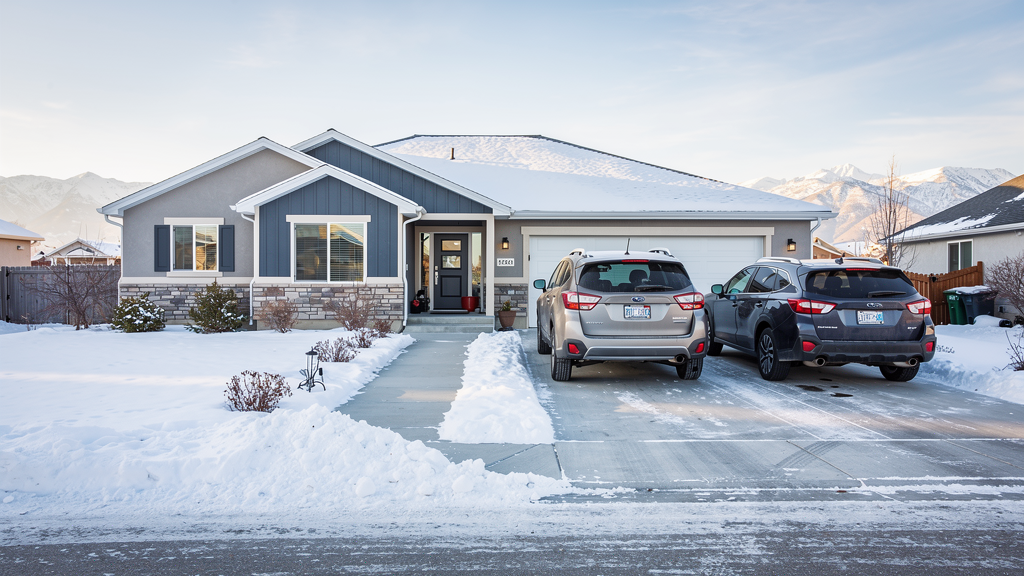
A driveway is built for daily driving, not for a hull and trailer to sit through a Utah winter. Snow, ice, and freeze-thaw cycles collect around anything that does not move. Covers shift, and drain plugs and fittings sit closer to slush than they would in a dedicated parking spot.
Home parking also costs you space you still need:
- The cars you actually drive in January lose their pad
- A boat in the garage puts cars outside, or stacks household goods in living space
- After a downsize, the boat that always fit at the last house may block the only stall, the extra bay, or the walkway you use every day
- A trailer that hangs past the pad, blocks a sidewalk, or occupies a visitor stall makes daily life harder for everyone on the street
Shared lots and tight neighborhood parking create a space crunch of their own. Moving the boat for the off-season is often about reclaiming ordinary household function: a clear driveway, a garage for cars, and a yard that is not a long-term parking pad.
Weather is the other reason people stop using home parking in winter. Wind works on loose covers, and sun and cold cycle through the same surfaces for months. Street parking adds passing traffic and limited room to check on the trailer.
Home can hold a boat through winter, but it is rarely the easiest place for the hull to sit.
What vehicle storage looks like for a boat and trailer
Vehicle storage, in this setting, is a place to park the hull, the trailer, and the seasonal gear so the house stays a house. At Sunset Storage Centers, that work happens at one family-owned facility at 857 N 500 E in Payson.
The mix on that property:
- Standard drive-up units (every unit at the facility is this format)
- Boat storage and trailer parking when a unit is the wrong shape
- Month-to-month leases
- Reservations online or by phone
The boat and trailer park on land at the facility. If the hull and trailer need more room than a unit can give, boat and trailer parking is the other option on the same property.
You pull in, leave the boat for the winter, and keep the driveway and garage for everyday use. When the next season starts, a month-to-month term lets you pull the trailer back out without a long contract hanging over the calendar.
Drive-up units for the boat, trailer, and gear
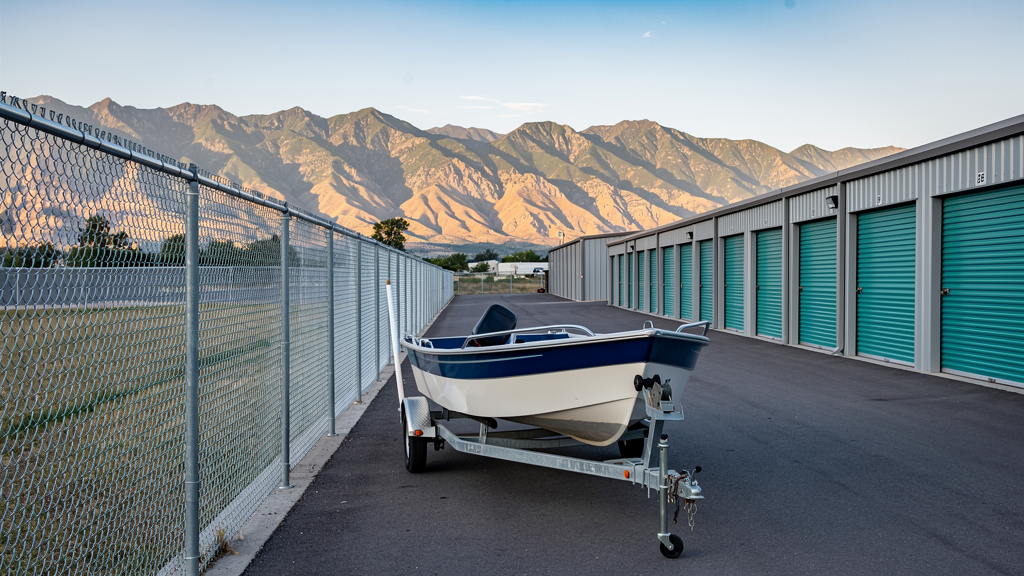
A drive-up unit is a pull-up space you can load from the vehicle. For some owners that means parking a smaller boat inside the unit. For others it means the trailer, the cover, life jackets, anchors, and the tubs of seasonal gear that used to live in the garage.
Because every unit is a standard drive-up, you plan around that format:
- Back up, unload, and close the door
- Use the defined footprint for items that no longer fit at home
- Load without a long carry from a distant lot
Gear storage is easy to overlook when the hull is the headline. Extra props, dock lines, and covers still take household space if they stay in the garage all winter. A drive-up unit can hold that overflow even when the boat itself uses a parking space.
Boat and trailer parking when the hull needs more room
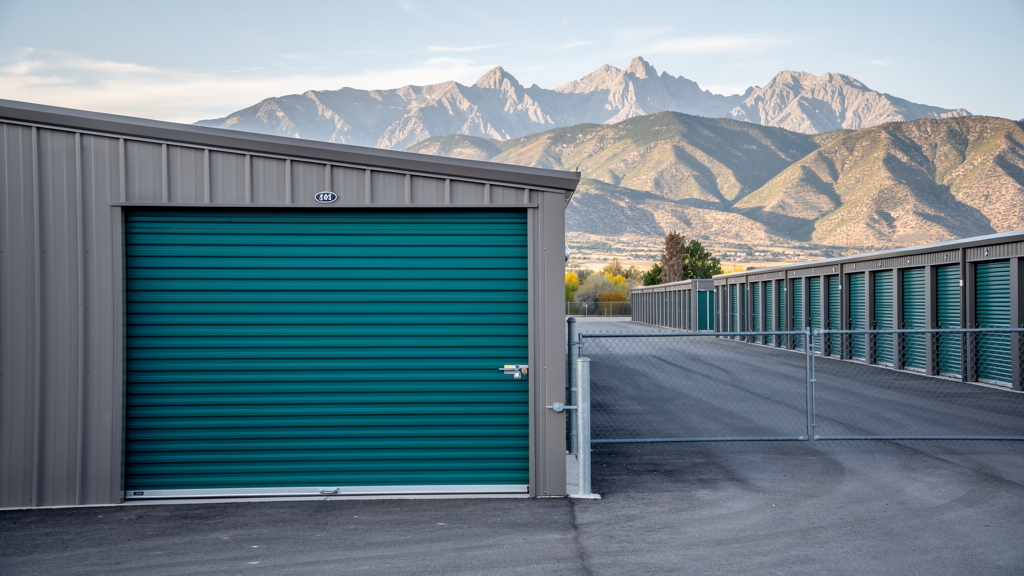
Some hull-and-trailer combinations are the wrong shape for a unit, no matter how you angle them. In that case, boat and trailer parking is the off-street option until the next season. The boat stays on its trailer, off the driveway, and off the street.
This is seasonal parking. The benefit is the space you get back at home and a dedicated place for the trailer to sit. You can still reach it during gate hours if you need to check a cover or grab a piece of gear.
Owners who split the load often use both options: parking for the hull and trailer, and a smaller drive-up unit for the loose equipment. That pairing is worth asking about when you reserve, because availability changes and fit depends on the actual length and width you bring.
Getting the boat ready before you park it
A little prep before you leave the boat for months is ordinary neighborly care, not a facility service. Sunset Storage Centers does not winterize boats. Owners usually handle cleaning, drying, covering, and basic fuel and battery care on their own, following whatever their manufacturer or mechanic already recommends.
The goal is modest. You want the hull reasonably clean and dry, the cover able to stay put, and the systems you care about in a stable state before the trailer sits. You do not need a complicated ritual to use storage, but you do need a plan so you are not doing wet, last-minute work in a cold driveway after dark.
If you are unsure about a mechanical step, ask the shop that already works on the boat. Storage is for parking, and prep is still your project.
Before you leave the water for the winter
Most owners start with a rinse and a chance for the hull to dry. Lake water, weeds, and dirt do not improve after sitting for months. A dry interior and a dry bilge are easier to live with than a damp one, especially once temperatures drop.
Common season-end habits:
- Rinse the hull and let it dry.
- Drain livewells, ballast, washdown lines, and any pocket that holds water.
- Put on a cover that actually fits, with enough tie-down to handle wind.
- Confirm fuel and battery care with your own references.
Some owners fill and stabilize. Some prefer to run the tank lower. Some disconnect or maintain the battery on a schedule they already use at home.
Treat those fuel and battery steps as choices to confirm with your mechanic or manufacturer, not as rules the storage facility imposes.
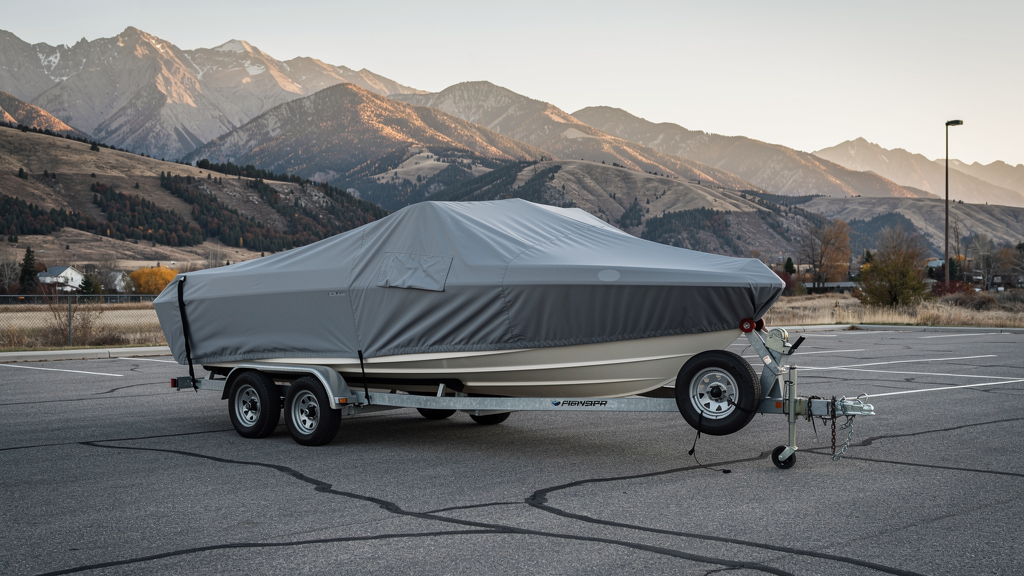
How to store a boat without a garage
You do not need a garage to store a boat for the winter. Vehicle storage is the alternative to leaving the trailer on the street, in the backyard, or in a driveway you still need for cars. That can be a drive-up unit when the boat and gear fit, or boat and trailer parking when they do not.
Access stays realistic. The Payson gate is open 6:00 AM to 10:00 PM every day with a personal code, including weekends and holidays. That window is enough for a cover check after a storm, a battery look in February, or a spring pull-out.
Without a garage, the loading path matters more. Drive-up units let you pull close. Boat and trailer parking keeps the hull on its own trailer so you are not assembling a backyard system of blocks, tarps, and borrowed driveway space.
Either way, the household keeps its indoor square footage.
Choosing a size for the boat, trailer, and the extras
Size is a measuring job, not a guess based on a nickname like "the 18-footer."
- Measure the hull on the trailer, including the tongue, the motor, and any rack or spare that sticks out.
- Add the width at the widest point, including bunks, fenders, and mirrors if they stay on.
- Decide whether covers, tubs, and dock gear will ride with the boat or need their own unit.
- Confirm fit when you reserve. A size that looks close on paper can still be wrong once the trailer tongue and a cover bow are in the door opening.
Sunset Storage Centers lists these storage unit sizes:
| Group | Listed footprints |
|---|---|
| Smaller | 5x10, 8x10 |
| Mid | 10x10, 8x13, 10x13, 10x15, 15x13, 10x20 |
| Longer | 8x20, 10x25, 13x25, 12x30, 13x30, 13x40 |
Those are the footprints available. A smaller unit often makes more sense for gear than for the hull. A 5x10 or 8x10 can hold covers, life jackets, and the seasonal bins that used to clog a garage shelf.
Mid sizes such as 10x10, 10x15, or 10x20 are the ones people look at when they hope the boat itself will go inside. Longer footprints such as 8x20, 10x25, 12x30, 13x30, and 13x40 exist for loads that need more length. None of those labels is a promise that a given boat will fit.
If the unit shape is wrong, do not force it. Boat and trailer parking exists for that case. Bring your measurements, say whether the motor stays on, and ask what is open right now.
Availability changes, and the right answer is the space that actually clears your trailer, not the one that sounds largest. Long-term seasonal storage also changes how you pack. Leave aisle room if you expect to grab gear midwinter, keep the items you might need near the door of a unit, and on a parking space, plan how you will reach the cover without climbing through clutter you stacked around the trailer in October.
What to look for in an off-season spot in south Utah County
A useful off-season spot is close enough to visit, easy enough to reserve, and clear about how you get in. Sunset Storage Centers is a family-owned facility, open since 2023, at 857 N 500 E in Payson, minutes off I-15. One location covers the south Utah County corridor rather than a chain of addresses.
What to check before you commit:
- One family-owned address at 857 N 500 E in Payson, minutes off I-15
- Month-to-month terms when the season start date is fuzzy
- Online or phone reservations
Month-to-month terms matter when you cannot predict the exact weekend the lake opens. You want the boat out of the driveway now, with the option to pull it when weather and your calendar line up. Online reservations match that pace.
Geography is practical here. Payson sits on the I-15 corridor that already connects Santaquin, Spanish Fork, Mapleton, Springville, Salem, and Elk Ridge to the rest of Utah County. If you already tow toward Utah Lake or up toward Strawberry, a Payson stop is on a familiar path instead of a new cross-town errand.
Access hours that match occasional visits
Gate access runs 6:00 AM to 10:00 PM daily with a personal code. That includes weekends and holidays. For a boat that sits most of the winter, those hours cover the visits people actually make: a daytime cover check, a Saturday gear grab, or a morning tow when spring arrives.
This is not 24-hour access. If you are used to coming and going at midnight, you will need to plan inside the posted window. For downsizing households and weekend boaters, occasional daytime access is usually the real requirement.
Reservations and questions are handled online or by phone at (385) 433-3891.
Security while the boat sits for months
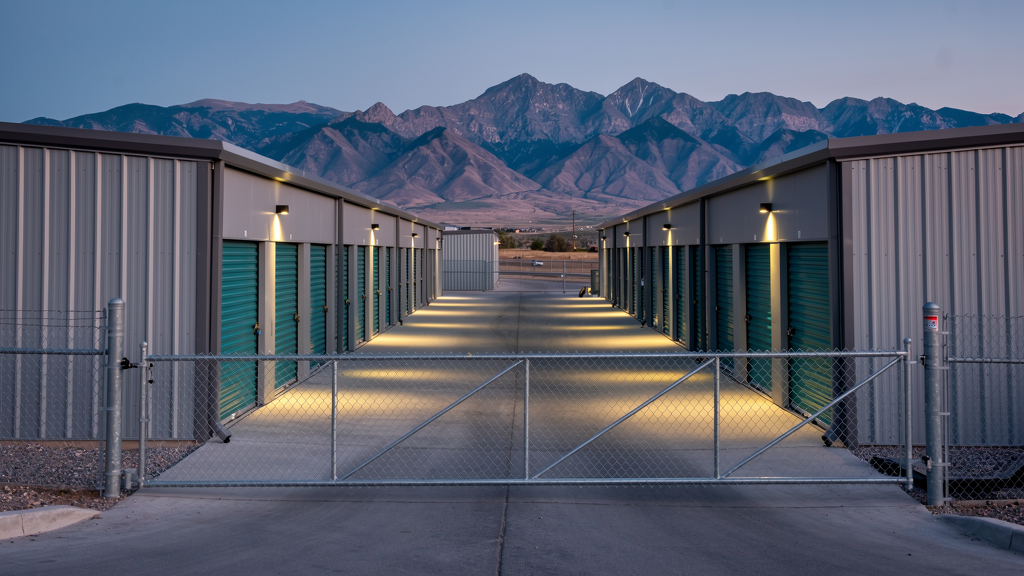
Documented controls while a boat sits for the off-season:
- Fenced facility
- Coded gate
- Lit drive aisles
- Video surveillance that runs 24/7
You still use a cover, lock what you can lock, and keep valuables out of the boat if you would not leave them in a driveway. The trailer sits behind a coded gate instead of on the street.
Lit aisles help when you visit near the edge of gate hours. A personal code means you are not waiting on a shared keypad story from a neighbor.
How to reserve vehicle storage in Payson
If the driveway is already losing the argument, the next step is to reserve.
- Reserve Now online, or call (385) 433-3891.
- Have your trailer measurements ready.
- Say whether you need a drive-up unit, boat and trailer parking, or both.
- Ask about current availability and current rates. Figures change, and the honest way to price the winter is to confirm them at that moment rather than rely on a number in an article.
- Mention it if you are splitting gear from the hull. A smaller unit plus a parking space can be a cleaner fit than trying to make one footprint do both jobs.
Leases are month-to-month, so the boat can come out when the next season starts without a long-term contract. Bring overall length, width, whether the motor stays on, and when you plan to arrive. That keeps the first visit short: you pull in during gate hours, park, and leave the household driveway clear.
Park the boat, keep the driveway
Boating season ends. The hull still needs a home, and the driveway is a poor one through a Utah winter, especially after a downsize. Vehicle storage at Sunset Storage Centers in Payson puts the boat and trailer at one family-owned facility with standard drive-up units and boat storage, gated access from 6:00 AM to 10:00 PM, and month-to-month terms.
What you get is a practical parking plan minutes off I-15, with a personal gate code, 24/7 video surveillance, and lit aisles while the boat sits. Reserve Now or call (385) 433-3891 to confirm a space before the next storm makes the driveway even less appealing.